




















<?xml version="1.0" encoding="UTF-8"?>
<rss version="2.0"
	xmlns:content="http://purl.org/rss/1.0/modules/content/"
	xmlns:wfw="http://wellformedweb.org/CommentAPI/"
	xmlns:dc="http://purl.org/dc/elements/1.1/"
	xmlns:atom="http://www.w3.org/2005/Atom"
	xmlns:sy="http://purl.org/rss/1.0/modules/syndication/"
	xmlns:slash="http://purl.org/rss/1.0/modules/slash/"
	>

<channel>
	<title>Allergic Living &#187; hives</title>
	<atom:link href="http://allergicliving.com/index.php/tag/hives/feed/" rel="self" type="application/rss+xml" />
	<link>http://allergicliving.com</link>
	<description>The magazine for those living with food allergies, celiac disease, asthma and pollen allergies.</description>
	<lastBuildDate>Tue, 18 Jun 2013 15:09:19 +0000</lastBuildDate>
	<language>en-US</language>
	<sy:updatePeriod>hourly</sy:updatePeriod>
	<sy:updateFrequency>1</sy:updateFrequency>
	<generator>http://wordpress.org/?v=3.5.1</generator>
		<item>
		<title>What is a Food Allergy?</title>
		<link>http://allergicliving.com/index.php/2010/09/01/what-is-a-food-allergy/</link>
		<comments>http://allergicliving.com/index.php/2010/09/01/what-is-a-food-allergy/#comments</comments>
		<pubDate>Wed, 01 Sep 2010 21:00:50 +0000</pubDate>
		<dc:creator>Allergic Living</dc:creator>
				<category><![CDATA[Food Allergy]]></category>
		<category><![CDATA[allergy symptoms]]></category>
		<category><![CDATA[anaphylaxis]]></category>
		<category><![CDATA[food allergy]]></category>
		<category><![CDATA[food intolerance]]></category>
		<category><![CDATA[hives]]></category>
		<category><![CDATA[top food allergens]]></category>
		<category><![CDATA[what is a food allergy]]></category>

		<guid isPermaLink="false">http://allergicliving.ds566.alentus.com/?p=4759</guid>
		<description><![CDATA[A food allergy occurs when a person’s immune system identifies proteins in a food as allergenic and begins to produce antibodies – called Immunoglobulin E or IgE – to guard against that food (e.g. shellfish or peanuts). These antibodies attach themselves to mast cells in the body, and when the person again eats the allergenic [...]]]></description>
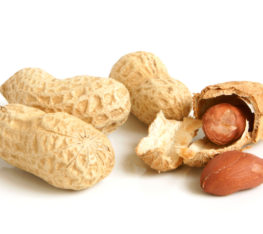
				<content:encoded><![CDATA[<p>A food allergy occurs when a person’s immune system identifies proteins in a food as allergenic and begins to produce antibodies – called Immunoglobulin E or IgE – to guard against that food (e.g. shellfish or peanuts).</p>
<p>These antibodies attach themselves to mast cells in the body, and when the person again eats the allergenic food, the proteins from it become attached to the IgE antibodies.</p>
<p>This causes the mast cells to degranulate, releasing histamine and other powerful chemicals. It is these chemicals that cause the symptoms of allergy.<br />
See: <a href="http://allergicliving.com/?p=4328 ">The Signs and Symptoms</a></p>
<p><strong>What is Anaphylaxis?</strong></p>
<p>There is a name for the severe form of allergic reaction: anaphylaxis. This is an emergency medical event involving one or more of the body’s systems: respiratory, gastrointestinal (the gut), the skin and the cardiovascular system (e.g. a drop in blood pressure).</p>
<p>In an anaphylactic reaction, a person can lose consciousness with a drop in blood pressure. Anaphylaxis can be fatal, which is why food-allergic individuals and parents of kids with food allergies are instructed by allergists to avoid even trace amounts of specific allergens: e.g. peanut, nuts or mlk.</p>
<p>Allergic reactions are notoriously inconsistent. An individual might have a minor reaction on one exposure to a food (e.g. a cashew) but another time have anaphylaxis.</p>
<p>The risk of severe reaction is higher in those with asthma, and those who have had a previous serious reaction. That said, there are instances of anaphylaxis without asthma or previous serious reaction. So if a person is food allergic, there is always a risk of anaphylaxis. So far, there is no way of measuring this level of risk, but researchers are beginning to locate markers that may lead to a test down the road.</p>
<p><strong>Top 8 Food Allergy Triggers (United States)<br />
</strong>These “priority allergens” cause the majority of food allergy reactions:<br />
• peanuts<br />
• tree nuts (e.g. almonds, cashews, hazelnuts, pecans, walnuts)<br />
• milk<br />
• egg<br />
• shellfish (shrimp, crab, lobster, mussels, clams)<br />
• fish<br />
• soy<br />
• wheat</p>
<p><strong>Top 11 Food Allergy Triggers (Canada)<br />
</strong>These “priority allergens” cause the majority of food allergy reactions:<br />
• peanuts<br />
• tree nuts (e.g. almonds, cashews, hazelnuts, pecans, walnuts)<br />
• milk<br />
• egg<br />
• shellfish (shrimp, crab, lobster, mussels, clams)<br />
• fish<br />
• soy<br />
• wheat<br />
• sesame<br />
• mustard<br />
• sulphites (Health Canada also lists these food additives as one of the common causes of reaction, though it is not a food protein.)</p>
<p><strong>A Note on Food Intolerance:</strong> This sensitivity can cause gastrointestinal distress, but it does not involve the immune system or a reaction to the proteins in food. An intolerance is not an allergy.</p>
]]></content:encoded>
			<wfw:commentRss>http://allergicliving.com/index.php/2010/09/01/what-is-a-food-allergy/feed/</wfw:commentRss>
		<slash:comments>1</slash:comments>
		</item>
		<item>
		<title>Signs and Symptoms of Food Allergy</title>
		<link>http://allergicliving.com/index.php/2010/08/30/signs-and-symptoms-of-food-allergy/</link>
		<comments>http://allergicliving.com/index.php/2010/08/30/signs-and-symptoms-of-food-allergy/#comments</comments>
		<pubDate>Mon, 30 Aug 2010 14:25:10 +0000</pubDate>
		<dc:creator>Allergic Living</dc:creator>
				<category><![CDATA[Allergy Basics]]></category>
		<category><![CDATA[Food Allergy]]></category>
		<category><![CDATA[allergies symptoms]]></category>
		<category><![CDATA[anaphylaxis]]></category>
		<category><![CDATA[crustacean allergy]]></category>
		<category><![CDATA[dairy allergy]]></category>
		<category><![CDATA[fish allergy]]></category>
		<category><![CDATA[hives]]></category>
		<category><![CDATA[milk allergy]]></category>
		<category><![CDATA[peanut allergy]]></category>
		<category><![CDATA[seafood allergy]]></category>
		<category><![CDATA[sesame allergy]]></category>
		<category><![CDATA[shellfish allergy]]></category>
		<category><![CDATA[soy allergy]]></category>
		<category><![CDATA[tree nut allergy]]></category>
		<category><![CDATA[wheat allergy]]></category>

		<guid isPermaLink="false">http://allergicliving.ds566.alentus.com/?p=3282</guid>
		<description><![CDATA[Do you sometimes feel sick to your stomach not long after eating? Have you noticed a pattern in the types of food you eat when this occurs? Perhaps you have experienced unexplained skin rashes (known as hives) or vomiting or diarrhea? Does your child refuse to eat a certain food, or complain that it makes [...]]]></description>
				<content:encoded><![CDATA[<p>Do you sometimes feel sick to your stomach not long after eating? Have you noticed a pattern in the types of food you eat when this occurs? Perhaps you have experienced unexplained skin rashes (known as hives) or vomiting or diarrhea?</p>
<p>Does your child refuse to eat a certain food, or complain that it makes his “tongue hurt”? These could be signs of a food allergy, and should be taken seriously.</p>
<p>It is common for the symptoms of food allergy to vary by individual – and from reaction to reaction in the same person. Not everyone will get all the symptoms, which range greatly in severity from mild to severe (and even fatal): your throat may feel tight on one exposure to your allergen or you may get itchy hives on your skin and vomiting with the next.</p>
<p><strong>The Range of Symptoms</strong></p>
<p>-Tingling in the mouth<br />
-Swelling of the tongue and throat / feeling of throat tightness<br />
-Itchy skin, hives or skin redness<br />
-Abdominal cramps<br />
-Vomiting or diarrhea<br />
-Breathing difficulty, wheezing<br />
-Faintness due to a sudden drop in blood pressure</p>
<p><strong> </strong></p>
<p><strong>Anaphylaxis</strong></p>
<p>Anaphylaxis is the severe form of allergic reaction. It involves one or more of the body’s symptoms; for example, the gastrointestinal tract, the respiratory tract, the skin and the cardiovascular system. A person experiencing anaphylaxis often has difficulty breathing, and the person could lose consciousness. Anaphylaxis puts a person at risk of death.</p>
<p>Anaphylactic reactions can come on quickly, and it’s impossible to know when a reaction will become severe. It’s important that people with food allergies are prepared for a reaction by always carrying an epinephrine auto-injector (either EpiPen or Twinject).</p>
<p>Experts recommend using epinephrine early if a person known to be at risk of anaphylaxis begins to show signs of allergy symptoms – don’t wait until the symptoms worsen, as it may become to difficult put a halt to the reaction once it’s in progress.</p>
<h5><em><em>Symptoms reviewed by Dr. Susan Waserman</em></em></h5>
]]></content:encoded>
			<wfw:commentRss>http://allergicliving.com/index.php/2010/08/30/signs-and-symptoms-of-food-allergy/feed/</wfw:commentRss>
		<slash:comments>0</slash:comments>
		</item>
	</channel>
</rss>